 Blog Summary: Working From Home in Legal Transcription: What Remote Roles Really Require
Remote legal transcription jobs offer flexibility, but they require accuracy, discipline, and a solid understanding of legal language. Even when working from home, professional standards remain high. This blog explains how remote legal transcription jobs work, the essential tools involved, employer expectations around accuracy and confidentiality, and how compensation typically functions. Understanding these factors helps set realistic expectations and prepares you for this precision-driven field.
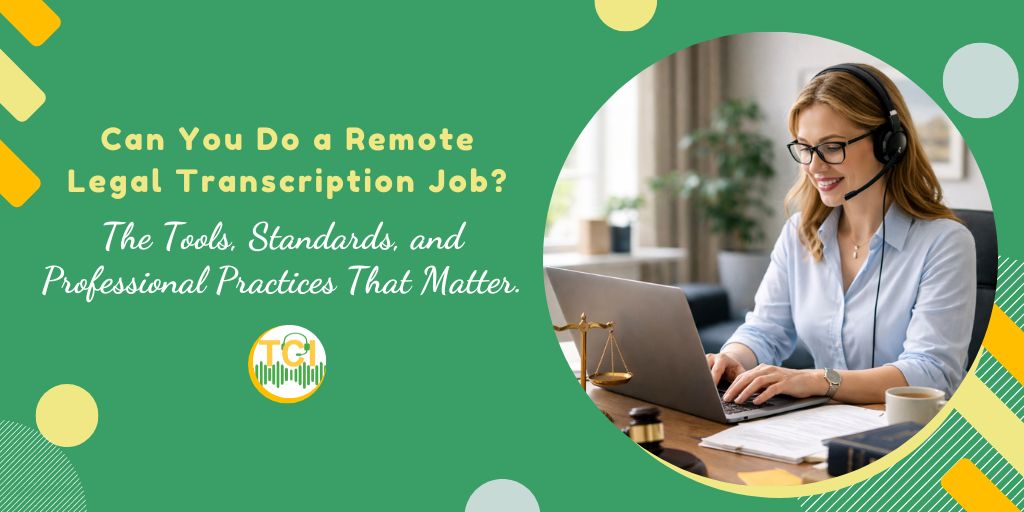
Remote work has reshaped how many industries operate, and the legal field is no exception. Today, remote legal transcription jobs allow professionals to contribute to legal documentation, case preparation, and investigative records without stepping into a courtroom or law office. The flexibility is appealing, but it often raises practical questions. What does a typical remote legal transcription job look like? What tools do you actually need? And how high are the expectations when you are working from home?
While the setting may be remote, the standards are not relaxed. Legal transcription remains a precision-driven profession that demands accuracy, discipline, and a solid understanding of legal language. Knowing how these roles truly function helps you approach remote opportunities with clarity rather than assumptions.
What Are Remote Legal Transcription Jobs?
Remote legal transcription jobs involve converting spoken legal recordings into written documents. These recordings may come from various legal environments, and each type requires careful listening, accurate formatting, and a clear understanding of legal terminology.
- Depositions: Sworn out-of-court testimonies where witnesses answer questions from attorneys under oath. These are often used to gather evidence before a trial and require precise, near-verbatim transcription.
- Court hearings: Formal proceedings before a judge where motions, arguments, or case updates are presented. Transcripts must accurately reflect who is speaking and the procedural language used.
- Legal interviews: Recorded conversations between attorneys and clients, witnesses, or other involved parties. These recordings may contain sensitive information and require careful attention to context and confidentiality.
- Arbitration proceedings: Alternative dispute resolution sessions where a neutral arbitrator hears arguments and evidence outside of traditional court. The transcripts must clearly document statements and rulings made during the session.
- Attorney dictations: Recorded notes or instructions spoken by attorneys, often used to draft legal documents, correspondence, or case summaries. These require strong terminology knowledge and formatting accuracy.
Because these transcripts often become part of official legal records, accuracy, consistency, and proper formatting are critical.
Can You Really Do Legal Transcription From Home?
Yes, many legal transcription roles are remote. However, remote does not mean casual.
Legal transcriptionists working from home are still expected to:
- Meet strict deadlines
- Follow formatting guidelines
- Maintain confidentiality
- Deliver highly accurate transcripts
Employers may operate through transcription service companies, legal outsourcing firms, or contract-based arrangements. Some roles are freelance, while others are structured remote positions with consistent workflows.
What Tools Do You Need for Remote Legal Transcription Jobs?
Working remotely in legal transcription requires more than just a quiet workspace. Because the work involves detailed audio review, precise formatting, and secure file handling, having the right equipment is essential. While specific requirements may vary by employer, most remote legal transcription jobs rely on a core set of tools that support accuracy, efficiency, and confidentiality.
1. A Reliable Computer
A desktop or laptop capable of running transcription software smoothly is essential. Legal transcription often involves lengthy audio files and detailed document formatting, so consistent performance and processing speed matter.
2. Transcription Software
Transcription software allows you to control audio playback efficiently. It enables playback speed adjustments, quick pausing and rewinding, and timestamp insertion when required. Some employers use proprietary platforms, while others permit widely used transcription tools.
3. A Foot Pedal
A USB foot pedal increases efficiency by allowing hands-free control of audio playback. This helps maintain typing flow, reduces interruptions, and minimizes strain during longer assignments.
4. High-Quality Headphones
Clear audio is critical in legal transcription. Noise-canceling or high-clarity headphones help distinguish speakers, identify terminology accurately, and detect subtle verbal cues that automated tools often miss.
5. Secure Internet Connection
Since audio files and transcripts are transferred digitally, a stable and secure internet connection is necessary. Many employers require encrypted file sharing or access through secure portals to protect sensitive information.
Also Read: How to Choose the Best Transcription Foot Pedal
What Professional Standards Matter Most?
Having the right tools is only part of succeeding in remote legal transcription. Employers are equally focused on whether transcriptionists follow professional standards consistently. Working from home does not lower expectations. In many cases, it increases accountability because there is less direct oversight.
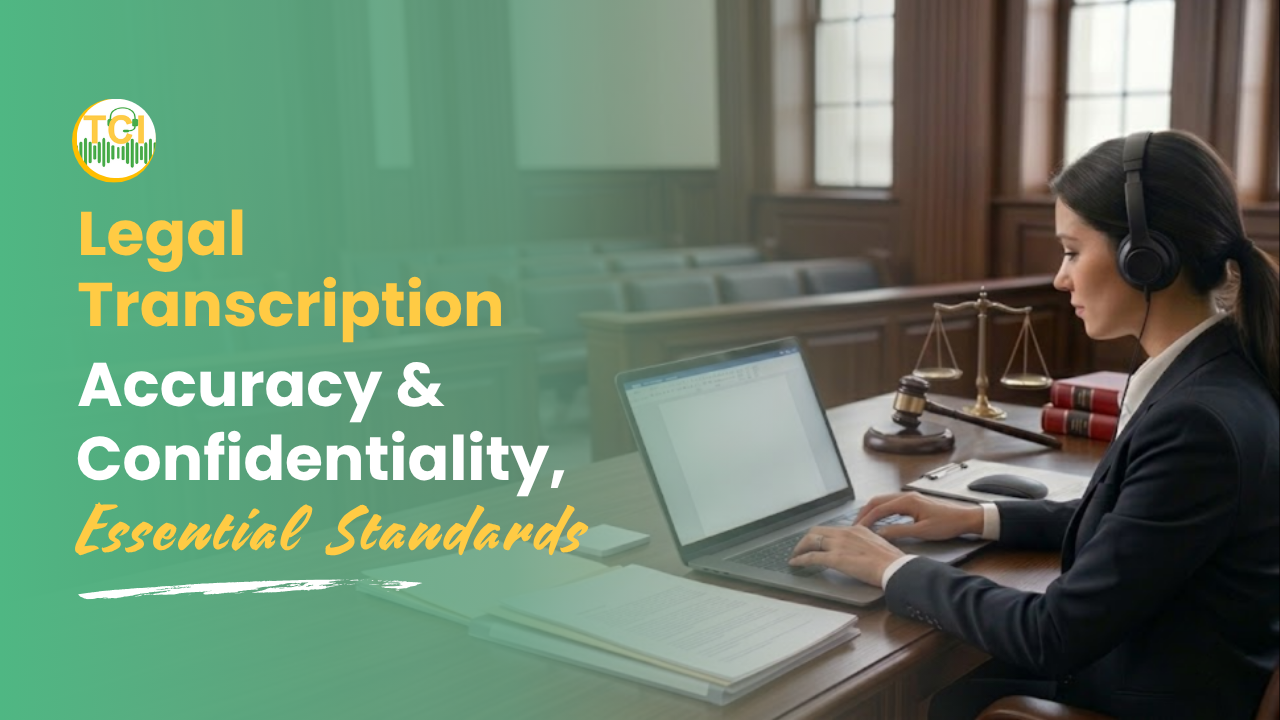
Accuracy remains the foundation of legal transcription. Near-verbatim precision is often required, and even a single misheard word can alter meaning in a legal document. Careful listening and thorough review are essential parts of the process.
Formatting consistency is another critical standard. Legal transcripts follow structured guidelines that typically include clear speaker labels, organized paragraph formatting, proper notation of pauses or interruptions, and correct capitalization of legal titles. Consistency across the entire document is just as important as correct spelling.
Terminology knowledge also plays a major role. Legal recordings often contain procedural language, Latin phrases, and references to statutes or case details. Remote transcriptionists are expected to recognize these terms and transcribe them correctly without relying on guesswork.
Finally, confidentiality is non-negotiable. Working remotely places greater personal responsibility on the transcriptionist to handle files securely and protect sensitive information at all times.
How Do Remote Legal Transcription Jobs Pay?
Compensation in remote legal transcription jobs varies depending on several factors. Pay is typically influenced by experience level, demonstrated accuracy, turnaround time, the complexity of assignments, and the structure of the hiring organization.
Some companies compensate transcriptionists per audio minute, while others pay per line or per completed transcript. Entry-level rates may be lower, particularly for those still building experience. More complex assignments, such as multi-speaker depositions or technical legal proceedings, often require proven skill and may be compensated at higher rates.
Approaching remote legal transcription with realistic expectations is important. As with many skill-based professions, earning potential tends to grow alongside accuracy, efficiency, and familiarity with legal terminology.
Is Certification Required for Remote Legal Transcription Jobs?
Certification is not universally required, but many employers prefer applicants who demonstrate structured training or proven competency.
Certification helps show that a transcriptionist understands:
- Legal terminology
- Formatting standards
- Accuracy expectations
- Professional workflows
Certification is not mandatory, but it can significantly strengthen your credibility and help you stand out in today’s competitive and AI-driven transcription market.
What Does a Typical Remote Workflow Look Like?
Remote legal transcription jobs usually follow a predictable structure:
- Receive audio file through secure portal
- Review assignment guidelines
- Transcribe audio while following formatting standards
- Proofread and review carefully
- Submit completed transcript by deadline
Also Read: Thinking About Remote Legal Transcription Jobs? 26 Companies Offering Remote Work in 2026
Common Challenges in Remote Legal Transcription
Remote legal transcription has advantages, but it also presents challenges.
Some common difficulties include:
- Working independently without direct support
- Managing fluctuating workloads
- Handling difficult audio quality
- Staying disciplined without structured office hours
Can AI Replace Remote Legal Transcription Jobs?
AI transcription tools are increasingly used to create draft transcripts. However, legal transcription requires human review because:
- AI struggles with legal terminology
- Contextual interpretation remains limited
- Formatting often requires manual correction
- Speaker identification may be inaccurate
Remote legal transcriptionists often review and refine automated drafts, but final responsibility still rests with human professionals.
Final Thoughts
Remote legal transcription jobs offer flexibility, but they also demand discipline, accuracy, and strong terminology knowledge. While the work can be done from home, the professional standards remain high. Understanding the tools required, the expectations involved, and the realities of remote workflow helps you prepare responsibly.
For individuals who want to strengthen their understanding of legal terminology and professional transcription standards, structured training can provide valuable preparation. Transcription Certification Institute (TCI) offers legal transcription training focused on terminology, formatting standards, and professional accuracy expectations. Building these foundational skills can help you approach remote legal transcription opportunities with greater confidence and clarity.
Enroll Now