 Blog Summary: Mastering Modern Transcription: Why AI Skills and Proofreading Now Go Hand in Hand
Modern transcription combines AI-generated drafts with human expertise, making it essential for transcriptionists to use AI transcription tools effectively and proofread AI-generated transcripts with precision. While AI accelerates the first-pass process and manages long or complex audio, human proofreading ensures accuracy, clarity, and proper formatting. Transcriptionists who master both skills benefit from faster turnaround times, higher-quality work, and stronger career opportunities.
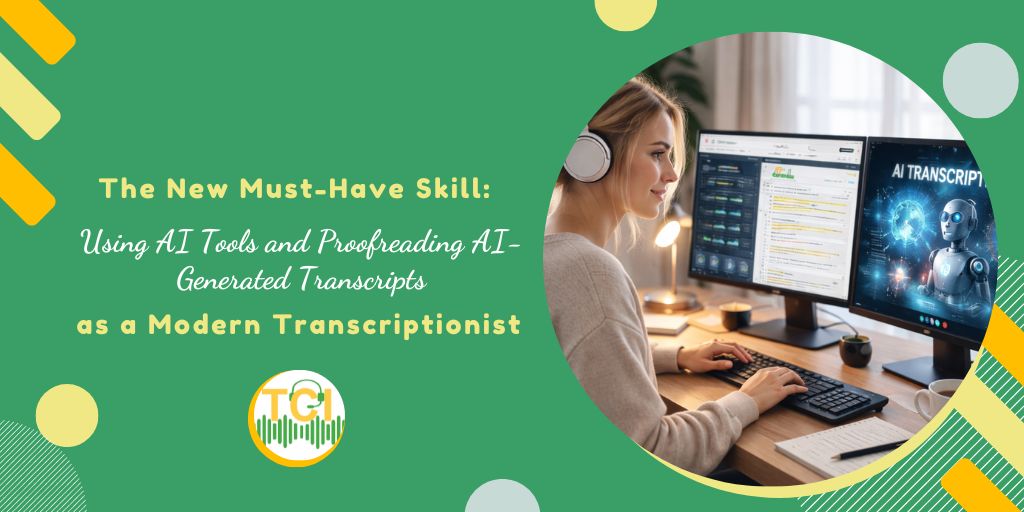
The transcription industry is changing faster than ever. New tools, AI features, and automatic draft generators are showing up everywhere. Companies that once relied only on human transcriptionists are now using AI transcription software to handle the first pass of audio. This shift is not replacing human workers. Instead, it is creating a new type of transcription role that blends technology with human accuracy.
If you plan to build a career in transcription or you are already working in the field, learning how to use AI tools and how to proofread AI-generated transcripts is no longer optional. These skills are becoming essential. Clients expect faster turnaround times, high-quality transcripts, and the ability to work with digital tools.
The good news is that once you understand how to use AI transcription tools correctly, your work becomes easier, faster, and often more rewarding.
Why AI Skills Matter for Today’s Transcriptionists
Many companies now use AI transcription software as part of their workflow. These systems can transcribe long files in a few minutes and create a rough draft that a transcriptionist then cleans up. You may have seen tools that can AI transcribe audio to text instantly or platforms that offer built-in editing features.
This shift happened because AI can handle repetitive tasks and speed up the first stage of transcription. But AI does not understand context the way a human does. It does not know when two people speak at once. It does not recognize sarcasm, tone, or specialized vocabulary.
That is where the transcriptionist comes in. Instead of typing everything from scratch, you receive an AI-generated draft and use your skill to correct, polish, and format it. This combination of speed and human accuracy is why many companies now look for transcriptionists who know how to use AI tools confidently.
How AI Transcription Tools Help You Work Faster
AI tools are not here to take away work. They are here to make your work smoother and faster. Many transcriptionists already use these tools daily because they reduce typing time and cut down on long hours spent replaying audio.
1. Faster First-Pass Drafts
AI transcription tools can create a basic transcript within minutes. They handle the heavy lifting in the beginning. Instead of starting with a blank page, you start with a draft that has most of the words already in place.
For many transcriptionists, this alone cuts their turnaround time almost in half.
2. Convenient for Long Audio Files
If you receive a three-hour interview or a lengthy podcast, typing it manually can take several hours. AI transcription software helps you manage large files by creating a complete draft. You still need to proofread, correct mistakes, and apply formatting, but the foundation is already done.
3. Helpful With Multi-Speaker Files
Some AI tools can identify speakers or at least separate audio segments. This can help transcriptionists avoid confusion with overlapping voices. You still have final control, but the tool gives you a structure to work with.
These advantages explain why companies want transcriptionists who understand how to work with AI-generated drafts rather than ignore them.
Why Proofreading AI-Generated Transcripts Is Now a Core Skill
AI drafts are helpful, but they are never perfect. Knowing how to proofread AI-generated transcripts is becoming one of the most important skills in the modern transcription field.
Common AI Errors You Will Still Need to Fix
- Incorrect homophones
- Misheard accents
- Missing punctuation
- Wrong speaker labels
- Errors in names and technical terms
- Trouble with crosstalk
- Difficulty with fast speech
- Missing context in emotional or unclear conversations
These issues show why AI cannot replace human transcriptionists. The human ear can pick up details that AI cannot understand.
Why Human Judgment Matters
Proofreading is not just correcting spelling errors. It is making sure the transcript actually matches what the speaker intended to say. A machine can guess, but only a human can check the meaning behind the words.
When you proofread AI-generated transcripts, you:
- Ensure accuracy
- Adjust tone and clarity
- Fix spacing, formatting, and timestamps
- Correct misheard industry jargon
- Confirm names, locations, brands, and technical numbers
- Make the final transcript usable for clients
How AI Proofreading Tools Improve Transcript Accuracy
AI tools are not only useful during transcription. There are also AI proofreading tools that help you edit transcripts more efficiently. These tools support you with grammar correction, punctuation cleanup, and consistency checks.
Helpful Features in AI Proofreading Tools
Many proofreading tools include:
- Grammar fix suggestions
- Punctuation adjustments
- Style consistency recommendations
- Word choice improvements
- Formatting assistance
- Time-stamp checks
- Redundancy removal
Building a Hybrid Workflow
Modern transcriptionists now use a combination of:
- AI transcription tools for first-pass drafts
- AI proofreading tools for cleaning the draft
- Human editing for final review and accuracy
Skills Modern Transcriptionists Need to Learn
To stay competitive in the modern transcription world, transcriptionists should build these key skills:
- Understanding How AI Drafts Are Generated: Learning how AI interprets speech helps you predict common errors and correct them quickly.
- Spotting AI-Specific Mistakes: You will learn to recognize where AI tends to struggle, such as medical terms, legal jargon, or industry acronyms.
- Using AI Proofreading Tools: Knowing how to use these tools saves time and strengthens transcript quality.
- Maintaining Formatting Standards: Clients often require specific guidelines, and this is something AI cannot guarantee. Humans ensure consistency.
- Final Accuracy Review: Human review remains the most important step in the entire workflow.
How Learning AI Tools Can Boost Your Transcription Career
The transcription field is growing, not shrinking. Companies in media, legal, medical, research, and corporate sectors all need reliable transcripts. Many of these companies already use AI transcription software and want transcriptionists who can handle AI drafts.
When you develop these skills, you position yourself as a modern, adaptable professional.
Here is how learning AI tools helps your career:
- You complete projects faster
- You increase your earning potential
- You handle larger workloads
- You become more valuable to clients
- You can work with companies that expect AI experience
- You reduce repetitive strain from long typing sessions
- You build confidence with advanced tools
Clients value transcriptionists who can deliver accurate, polished work quickly. Learning how to use AI tools helps you meet that expectation.
Also Read: How AI & Speech Recognition Are Changing Legal Transcription
Final Takeaway
The transcription field is shifting toward a blended model where AI tools create the first draft and human transcriptionists bring accuracy, clarity, and context. Knowing how to use AI transcription tools and how to proofread AI-generated transcripts is now essential for anyone pursuing a modern transcription career.
AI helps you work faster. Your skills make the transcript accurate. Together, they give you a strong competitive edge.
Transcription Certification Institute (TCI) helps learners build these exact strengths. Through its lessons and hands-on practice, TCI teaches the technical side of transcription along with how to use AI tools effectively in your workflow. This helps you work more efficiently, improve accuracy, and grow confidently in an industry that is evolving quickly.
With the right training and tools, you can become the kind of transcriptionist clients rely on today.













Comments are closed